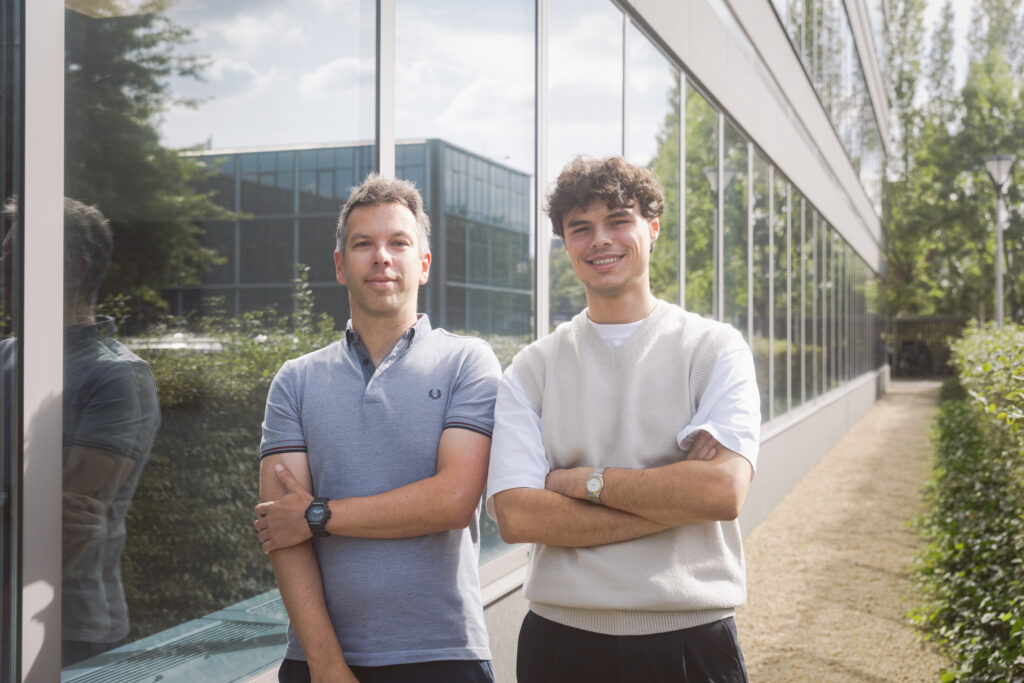
Haiu joins Spire, strengthening our Agentforce expertise
Discover how Haiu combines dedicated Agentforce expertise with Spire’s capabilities in Salesforce, data and integration to make AI work for your business.



Dreamforce 2026 preview: the agentic enterprise, Data 360, governance and adoption. What Spire is watching, and why it matters.
Dreamforce returns to Moscone Center in San Francisco from September 15 to 17, 2026. Salesforce has lined up more than 1,600 breakout sessions, 50-plus keynotes and one unmissable theme: becoming an agentic enterprise.
That phrase is easy to nod along to and genuinely exciting to act on. So before the keynote hype starts, we want to share what our teams are actually watching, and more importantly, why each trend deserves a place on your leadership agenda rather than your reading list.
Spire will be there in person. If you want to compare notes on site, get in touch and we will make time for a coffee in San Francisco.
Most organizations we speak with have moved well past the “should we try AI” stage. They run a service agent that answers tier-one questions, a marketing agent that drafts campaign copy, maybe a sales agent that summarizes calls. All useful, all visible, all easy to demo.
And this is exactly where the next step begins.
The momentum is real. Salesforce’s own Agentic Enterprise Index shows agent deployments more than doubling year over year, and Agentforce adoption has grown quickly across every industry we work in. In short, the technology has proven itself.
The opportunity now sits one level up. Today, each agent typically works on its own data, follows its own logic and stops at the edge of its department. In other words, you have a set of capable specialists rather than a connected team. Dreamforce 2026 is essentially Salesforce’s answer to that gap, and here is what we will be listening for.
The headline shift moves from single agents to multi-agent systems that hand work to each other, across departments and increasingly across company boundaries too. Picture it in practice: a marketing agent qualifies interest, passes full context to a sales agent, which hands a signed deal to a service and onboarding agent. Nobody copies anything between systems.
Why it matters: orchestration is where the return lives. One agent saves minutes, whereas a chain of agents removes an entire handover. It also means your process design, rather than your prompt writing, becomes the real differentiator.
Perhaps the most important development of the past year is not smarter models, it’s more predictable ones. Salesforce has layered deterministic control on top of generative reasoning, including Agent Script, a scripting layer that lets you define the explicit if/then logic an agent must follow. Expect Dreamforce to go deep on hybrid reasoning, agent lifecycle management, testing and observability.
Why it matters: reliability is the gate that opens production. Once you can predict how an agent behaves, you can put it in front of customers with confidence, and you can finally answer the board question every leader gets asked: “what happens when it gets it wrong?” Plan for the skills to design and maintain that logic, because this shifts real design work into your team, and budgeting for it now saves a scramble later.
Salesforce has wrapped Sales Cloud in agents as Agentforce Sales, and rebuilt Marketing Cloud as Agentforce Marketing. As a result, campaign briefs, audience selection, content drafting, journey triggers and performance optimization increasingly happen with an agent in the loop rather than a person in the queue.
Why it matters: for commercial leaders, this trend offers the shortest path to a number. Think faster campaign cycles, genuine one-to-one personalization at scale, and pipeline hygiene that maintains itself. Moreover, it reframes the job itself. The CMO and CRO of 2027 will not simply run demand and revenue, they will design how humans and agents divide the work.
Agents perform only as well as the context they can reach. Therefore expect heavy focus on real-time access to data, on unified customer profiles, and on keeping meaning intact as data moves between platforms. In practice, this means agents read from the source instead of waiting for an overnight batch to catch up.
Why it matters: this is where agentic ambitions either take off or stall. If your customer data sits scattered across an ERP, a legacy CRM, a webshop and three spreadsheets, no amount of agent configuration will bridge it. Integration and data quality are the real prerequisite, which is why MuleSoft conversations will be busier than ever this year. Our advice is unromantic but reliable: audit your data foundation before you add another agent to the mix.
Salesforce has positioned Slack as the primary workspace for interacting with agents and customer data. Instead of logging into a system to check on work, your teams simply have a conversation in the channel where the work already happens.
Why it matters: adoption follows convenience. The interface question sounds cosmetic, yet it decides whether your people actually use what you built. In fact, we have seen more transformations succeed on this detail than on any feature comparison.
For European organizations, this belongs on the main agenda rather than in a side session. High-risk obligations under the EU AI Act apply from August 2026. Encouragingly, Salesforce has built ahead of the curve: Agentforce holds Second-Level Compliance under the EU Cloud Code of Conduct, the Einstein Trust Layer governs how data reaches the model, and EU data residency is available through Hyperforce regions including Germany and France, as a subscription-tier option.
Why it matters: you will want to show which agent did what, on which data, under which policy, across every system it touched. Design that audit trail in from the start and compliance becomes a design choice rather than a retrofit. Get this right and it turns into a genuine trust advantage with your customers.
Technology works. It nearly always does. The real work is cultural, and agentic AI raises the stakes, because you are not asking people to learn a new screen, you are asking them to delegate judgment.
Skills follow the same pattern. Research from the OECD shows that AI literacy across business teams deserves as much investment as deep AI specialism, and sales, marketing and service teams are exactly where these agents land.
Why it matters: an agent your teams trust becomes a multiplier. So invest in enablement, clear escalation paths and open conversations about how roles evolve. This is the part of transformation we have always cared about most, and it remains the difference between a deployment and a result.
The organizations that will get the most from this next wave are not the ones with the most agents. Rather, they are the ones that picked two or three high-friction processes, connected the data properly, built in guardrails and governance from day one, and brought their people along.
Less spectacular than an autonomous enterprise, perhaps. Far more likely to survive contact with reality.
Dreamforce is big. In 2025 it drew over 40,000 people on site and more than 200,000 online, and the 2026 session catalog already lists well over a thousand sessions. Without a filter, you will come home with a tote bag and a vague sense of momentum.
Three practical suggestions:
Dreamforce will produce a lot of energy and a handful of genuinely important signals. We would love to sort through them with you.
Spire will be at Dreamforce 2026 in San Francisco, September 15 to 17. If you are attending, reach out and let’s set up a meeting on site. We will happily walk through where your data, processes and teams stand today, and which of these trends will move your business in the next twelve months.
Not traveling this year? Registration and the full agenda live on the Dreamforce site, and Salesforce runs a free virtual program on Salesforce+ from September 15 to 18 with 400-plus sessions and live keynotes. Either way, we are glad to compare notes afterwards, so get in touch.
Spire will be in San Francisco from September 15 to 17. Tell us what you want to explore and we will find a moment between sessions.
Dreamforce 2026 runs from September 15 to 17, 2026 at the Moscone Center in San Francisco. San Francisco has hosted the event every year since its launch in 2003.
Salesforce has confirmed “becoming an agentic enterprise” as the central theme. Expect the agenda to focus on autonomous AI agents, Data 360, industry-specific applications and enterprise governance, across more than 1,600 breakout sessions and 50-plus keynotes.
An agentic enterprise runs on AI agents that work alongside employees rather than on software people operate by hand. Instead of a person moving work between systems, orchestrated agents pick up tasks, consult customer data and hand off to each other across marketing, sales and service.
Yes. Salesforce runs a free virtual program on Salesforce+ from September 15 to 18, with 400-plus sessions, live keynotes and virtual hands-on training. In 2025, more than 200,000 people followed the event online.
Agentforce 360 is the Salesforce platform that connects humans and AI agents in one trusted system. It underpins Agentforce Sales and Agentforce Marketing, embeds agents in Slack, and draws on Data 360 for customer context.
High-risk obligations under the EU AI Act apply from August 2026, so European organizations need to evidence which agent acted on which data under which policy. Salesforce supports this through the Einstein Trust Layer, Second-Level Compliance under the EU Cloud Code of Conduct, and EU data residency via Hyperforce regions including Germany and France.
Discover how Haiu combines dedicated Agentforce expertise with Spire’s capabilities in Salesforce, data and integration to make AI work for your business.

The five announcements from Dreamforce 2026 worth your attention, translated from keynote language into what actually changes for the people using Salesforce every day.

An AI agent pilot rarely stalls on technology. Discover five signs that yours has stalled, and what each one tells you to fix first